Frankland of Lafter Hall
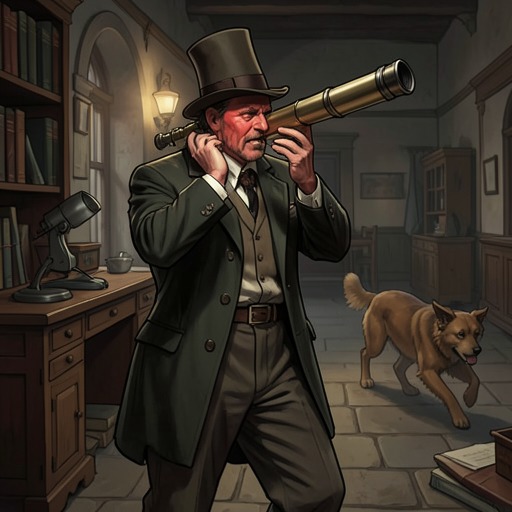
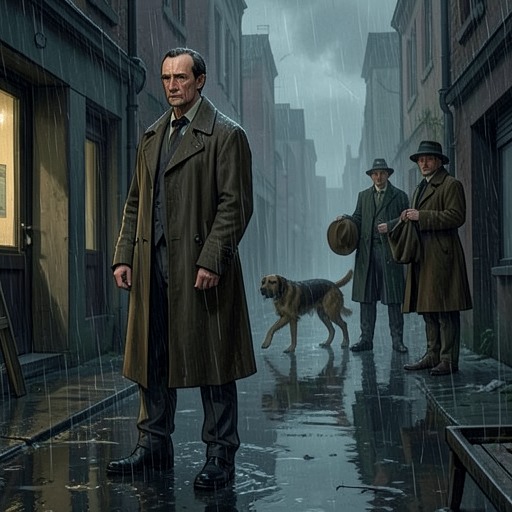
The Hound of the BaskervillesFrankland of Lafter Hall is an elderly landowner near Baskerville Hall, distinguished by an appetite for litigation, disputes over public paths, and an amateur astronomer’s determination to watch the moor. In Dr. Watson’s account, his quarrelsome legal enthusiasm supplies comic relief amid the danger surrounding the escaped convict, while his telescope and shifting priorities make him part of the local pursuit.
Identity and Setting
Frankland lives at Lafter Hall, about four miles south of Baskerville Hall. He is described as red-faced, white-haired, and choleric. In the sparsely populated district, he is one of the few educated local men known to Sir Charles Baskerville, alongside Dr. Mortimer and Stapleton. His residence and presence help give the investigation a human geography: among a handful of scattered homes on the moor, he is a conspicuous neighbor with his own interests and causes.
Litigation and Local Reputation
Frankland’s passion is British law, and he has spent a large fortune on lawsuits. He takes up cases for the pleasure of fighting, apparently with little concern for which side he supports. At times he closes a right of way and challenges the parish to make him reopen it; at others, he tears down another landowner’s gate and argues that a path has existed there from time immemorial, daring its owner to prosecute him for trespass. His knowledge of old manorial and communal rights is applied sometimes for the villagers of Fernworthy and sometimes against them.
That inconsistency gives his legal career a public, almost theatrical rhythm. Depending on his latest exploit, villagers either carry him in triumph through the street or burn him in effigy. He is said to have about seven lawsuits pending, a burden expected to consume the remainder of his fortune and eventually leave him harmless. Away from the law, Dr. Watson considers him kindly and good-natured, a qualification that complicates the picture of a man who repeatedly turns local rights and boundaries into contests.
The Search for the Escaped Convict
During the hunt for the escaped convict, Frankland uses an excellent telescope from the roof of his house to sweep the moor for a sighting. His watchfulness makes him a potential source of information, but it does not make him a dependable ally. When Dr. Watson visits him, Frankland says he will not help the police: he feels they treated him shamefully, particularly because the villagers burned his effigy rather than him. He frames the matter as a legal grievance, anticipating that the case of Frankland v. Regina will stir public indignation, and tries to persuade Dr. Watson to stay and drink with him.
Dr. Watson declines the invitation and leaves. Frankland’s refusal brings his habitual legal antagonism into the urgent search: even the possibility of assisting the authorities is filtered through his sense of personal injury and public vindication. His telescope points toward the moor, but his attention remains divided between the escaped convict and his own quarrels.
Narrative Role
Frankland’s planned action against Dr. Mortimer for excavating a Neolithic skull from a barrow at Long Down extends his legal disputes into the novel’s archaeological and investigative world. The reported charge is that the grave was opened without the next of kin’s consent. Watson presents this prospect as another of Frankland’s eccentric pursuits, and explicitly identifies him as comic relief in a story whose other concerns are grave and dangerous.
His characterization rests on repetition and contradiction rather than on a major transformation: he turns paths, gates, village opinion, police relations, and even archaeological excavation into occasions for litigation, yet is also described as good-natured. The same self-absorption that makes him comic can obstruct practical cooperation, while his telescope places him close to a search whose importance exceeds his private disputes.